
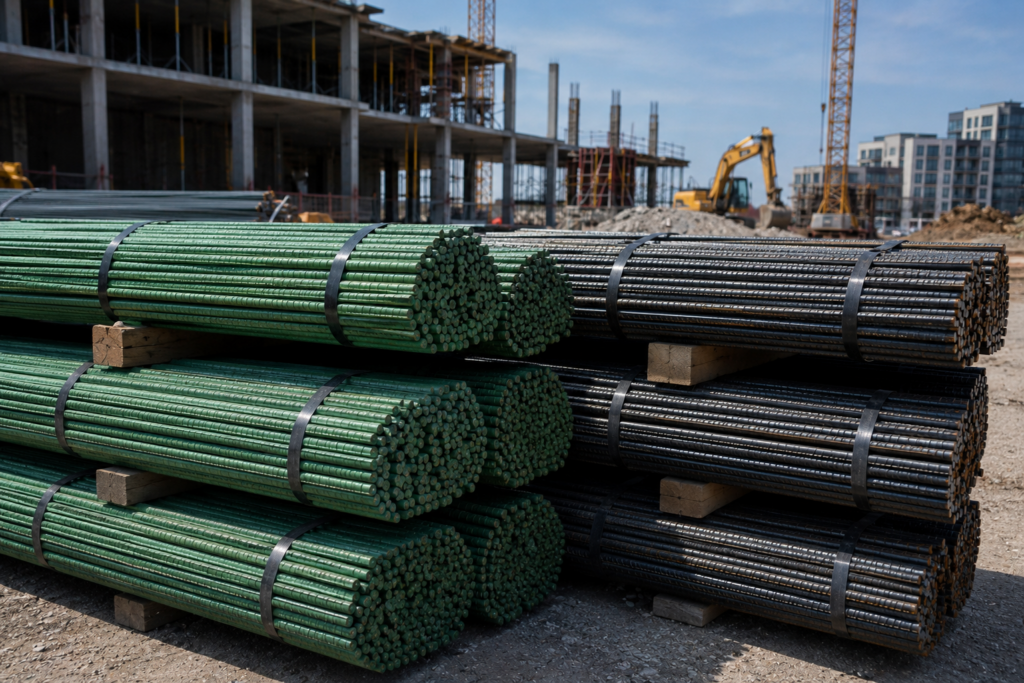
Ontario construction projects face unique durability challenges. Harsh winters, freeze-thaw cycles, and widespread road salt use can accelerate corrosion in reinforced concrete structures. For developers, engineers, project managers, and procurement professionals, selecting the right reinforcement material can significantly impact long-term performance, maintenance requirements, and lifecycle costs.
Understanding the differences between standard rebar and epoxy-coated rebar helps project teams make informed decisions when planning commercial, industrial, and infrastructure developments across the province.
Why Corrosion Matters in Ontario
Corrosion is one of the most common causes of deterioration in reinforced concrete structures. While concrete provides some protection for embedded steel, moisture, oxygen, and chlorides can eventually penetrate the concrete over time.
Ontario’s climate creates particularly challenging conditions for reinforced concrete. Winter road salt exposure introduces chlorides that can migrate into concrete and reach the reinforcing steel. Once corrosion begins, the steel expands, creating internal pressure that can lead to cracking, spalling, and structural damage.
For bridges, parking garages, transportation infrastructure, and other exposed structures, corrosion protection is often a critical design consideration. Choosing the appropriate reinforcement material at the beginning of a project can help improve durability and reduce future maintenance costs.
What Standard Rebar Is
Standard rebar, often referred to as black rebar, is carbon steel reinforcing bar used to strengthen concrete structures. It provides the tensile strength that concrete lacks, allowing structures to resist bending, tension, and other forces encountered during service.
Standard rebar remains the most commonly used reinforcement option because it is readily available, cost-effective, and suitable for a wide range of construction applications. Commercial buildings, industrial facilities, foundations, slabs, and retaining walls frequently utilize standard reinforcement successfully.
Working with an established reinforcing steel supplier Ontario helps ensure projects receive quality reinforcement products that meet design and construction requirements.
While standard rebar performs exceptionally well in many environments, it is more vulnerable to corrosion when exposed to chlorides or excessive moisture. This limitation becomes particularly important when evaluating projects expected to face long-term environmental exposure.
What Epoxy-Coated Rebar Is
Epoxy-coated rebar starts as conventional reinforcing steel but receives a protective epoxy coating during manufacturing. The coating creates a barrier that helps prevent moisture, oxygen, and chlorides from reaching the underlying steel.
The distinctive green coating is widely recognized throughout the construction industry and has been used for decades in applications where corrosion resistance is a priority.
The primary advantage of coated reinforcing steel is its ability to provide additional corrosion protection without requiring major changes to standard construction practices. When properly handled and installed, epoxy-coated rebar can significantly reduce the risk of premature reinforcement deterioration.
For projects requiring enhanced durability, Epoxy solutions can provide an effective option for extending service life in aggressive environments.
Performance Differences in Ontario Conditions
The most important distinction between standard rebar and epoxy-coated rebar is corrosion resistance.
In low-risk environments, standard rebar often performs very well. Interior structural components, foundations with minimal exposure, and protected concrete elements may not require additional corrosion protection. In these situations, standard reinforcement can provide decades of reliable service at a lower initial cost.
However, exposure conditions change the equation significantly.
Structures subjected to winter road salt exposure, repeated wetting and drying cycles, or direct contact with chlorides face a much greater risk of corrosion. Examples include bridge decks, parking structures, ramps, transportation corridors, and certain industrial facilities.
Epoxy-coated rebar helps reduce the likelihood of corrosion by limiting direct contact between the steel and corrosive elements. This additional layer of protection can improve concrete durability and contribute to longer service life.
For municipalities, developers, and infrastructure owners, the ability to reduce corrosion-related deterioration can have a meaningful impact on asset management strategies and long-term operating budgets.
Cost Versus Lifecycle Value
Material selection decisions often begin with cost comparisons. Standard rebar generally carries a lower upfront price than epoxy-coated alternatives, making it attractive for projects with limited exposure to corrosive conditions.
However, evaluating reinforcement options based solely on initial material cost may not provide a complete picture.
Corrosion-related repairs can be expensive and disruptive. Concrete removal, reinforcement replacement, traffic management, operational downtime, and rehabilitation work can create substantial costs throughout a structure’s lifespan.
Epoxy-coated rebar typically requires a higher initial investment, but it may help reduce future maintenance and repair expenses. In environments where corrosion risk is significant, the lifecycle value often becomes an important consideration during the specification process.
Project teams increasingly evaluate total ownership costs rather than focusing exclusively on construction budgets. This approach helps ensure reinforcement decisions support both immediate project goals and long-term asset performance.
Common Applications for Epoxy-Coated Rebar
Epoxy-coated reinforcement is commonly specified when structures are expected to face elevated corrosion risks.
Typical applications include:
- Bridge construction
- Parking structures and parking garages
- Highway infrastructure
- Transportation facilities
- Concrete exposed to de-icing chemicals
- Marine and waterfront structures
- Industrial facilities with corrosive environments
- Municipal infrastructure projects
- Infrastructure reinforcement requiring extended service life
These applications often experience ongoing chloride exposure, making corrosion protection a key component of overall durability planning.
As Ontario continues investing in transportation networks, public infrastructure, and commercial development, demand for corrosion-resistant reinforcement remains an important segment of the construction industry.
How an Epoxy-Coated Rebar Supplier Supports Project Success
Material selection is only one part of successful project execution. Working with an experienced epoxy-coated rebar supplier helps ensure reinforcement products meet specifications, project schedules, and quality requirements.
Reliable suppliers understand the unique demands of commercial, industrial, and infrastructure construction. They can coordinate material availability, fabrication requirements, delivery schedules, and project logistics to help keep work moving efficiently.
Timely access to reinforcement materials is particularly important on large-scale projects where delays can affect multiple trades and project milestones. Dependable rebar supply and delivery Ontario services help contractors maintain productivity while reducing the risk of scheduling disruptions.
In addition to supplying material, experienced reinforcement specialists can help project teams evaluate environmental conditions, durability requirements, and reinforcement options that align with project objectives.
For owners and contractors focused on long-term performance, supplier expertise can become a valuable part of the decision-making process.
As corrosion concerns continue to influence construction practices across Ontario, understanding the strengths and limitations of both standard and epoxy-coated reinforcement allows project teams to make informed choices that support durability, performance, and lifecycle value.
Request a quote for epoxy-coated rebar supply and delivery in Ontario.
