
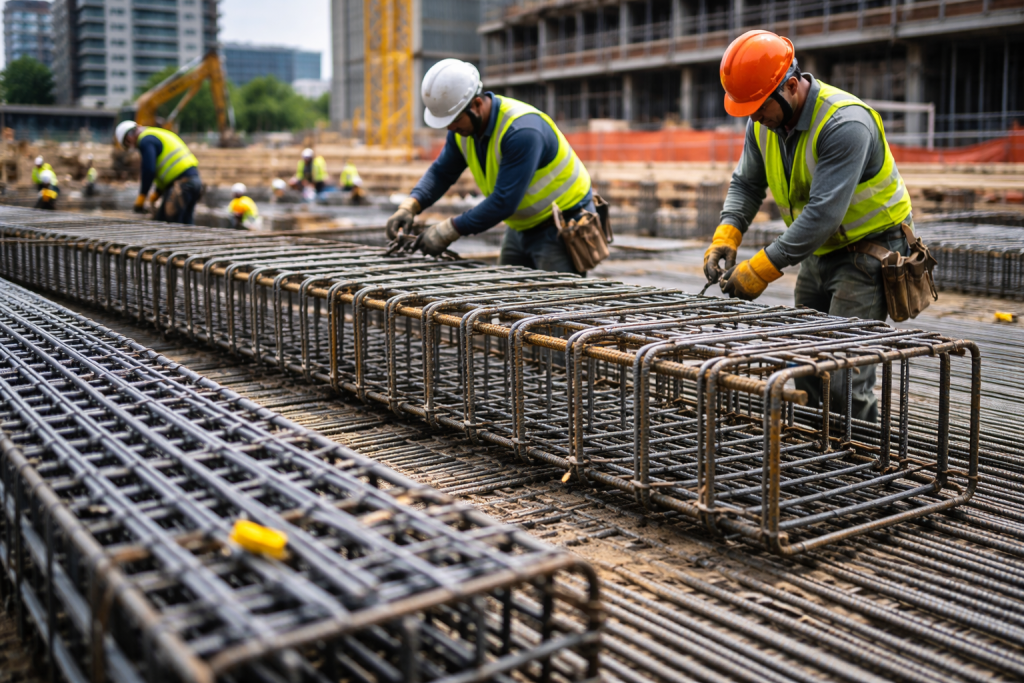
In Ontario construction projects, rebar installation is rarely viewed as a planning priority. It is often treated as a step that happens once excavation and formwork are complete. In practice, this mindset is one of the most common causes of schedule overruns, inspection failures, and avoidable downtime.
Rebar installation planning done early protects the entire build sequence. It aligns detailing, fabrication, and site readiness before crews arrive, reducing delays that ripple across trades. For projects across the GTA and other high-performing Ontario markets, this coordination is no longer optional. It is a baseline requirement for staying on schedule.
Why Rebar Delays Have an Outsized Impact
Rebar sits at the center of structural work. Foundations, slabs, walls, columns, and suspended floors all depend on reinforcing steel being installed correctly and on time. When rebar work stalls, concrete pours are delayed. When pours are delayed, inspections, formwork removal, and follow-on trades are pushed back.
In Ontario, these delays are amplified by external factors. Weather windows are narrow during winter and shoulder seasons. Inspection availability can be limited. Rescheduling cranes, pumps, or crews often takes days rather than hours.
Most of these disruptions are not caused by material shortages. They are caused by planning gaps that surface too late to correct efficiently.
Common Planning Failures That Cause Installation Delays
Many rebar delays can be traced back to a few recurring issues.
Late or incomplete drawings are a major factor. When detailing is finalized after fabrication begins, installers are forced to work with steel that does not fully match site conditions. This leads to cutting, bending, or retying on site, slowing placement and increasing error risk.
Another issue is poor coordination between fabrication and site readiness. Steel arrives before forms, embeds, or access points are ready. Crews wait, materials sit idle, and schedules slip.
Finally, missing accessories and supports often cause inspection failures. Incorrect cover, spacing, or alignment results in corrective work that could have been avoided with proper planning.
Installation Planning Starts With Accurate Detailing
Early rebar installation planning begins with accurate estimating and detailing. This stage defines quantities, bar sizes, bends, lap lengths, and placement sequences. When it is rushed or treated as a formality, downstream problems are almost guaranteed.
Using rebar estimation and detailing services ensures drawings reflect real site conditions and installation requirements. Detailing that accounts for formwork layouts, embeds, penetrations, and sequencing allows installers to execute without improvisation.
Clear, coordinated drawings also reduce inspection issues. Inspectors expect installed reinforcing steel to match approved plans. When plans are accurate from the start, approvals move faster and with fewer corrections.
Prefabrication Reduces On-Site Risk
On-site rebar assembly introduces uncertainty. Weather, congestion, and labour availability all affect productivity. Prefabrication shifts that risk off-site, where conditions are controlled and work can be scheduled with precision.
Integrating rebar prefabrication services into early planning allows cages, mats, and assemblies to be produced in advance and delivered ready for placement. This shortens installation time and reduces reliance on large tying crews on site.
For foundations, parking structures, and mid-rise construction, prefabrication also improves safety and consistency. Installers focus on placement accuracy rather than assembly under pressure.
Site Readiness and Placement Accuracy
Even well-detailed and prefabricated steel can cause delays if the site is not prepared. Installation planning must account for access, staging areas, and placement supports before delivery.
Planning for rebar placing accessories ensures chairs, spacers, and supports are available when needed. These components are critical for maintaining correct cover and alignment, especially in foundations and suspended slabs.
When accessories are missing or insufficient, installers are forced to improvise. This often results in failed inspections and rework. Including these requirements in the installation plan prevents those setbacks.
Cutting and Bending Must Align With the Schedule
Late changes to rebar shapes or lengths are a common source of installation delays. When cutting and bending are handled reactively, crews lose time waiting for corrected steel or making adjustments on site.
Early coordination with rebar bending and shearing services ensures steel arrives fabricated to specification and sequenced for installation. This reduces congestion on site and allows crews to move continuously through placement tasks.
In Ontario projects with tight pour schedules, this level of coordination is essential for keeping concrete work on track.
Ontario-Specific Pressures Make Early Planning Critical
Construction in Ontario carries unique constraints. Winter conditions limit working hours and slow productivity. Municipal inspection schedules can create bottlenecks. High-density urban sites restrict staging and access.
Early rebar installation planning accounts for these realities. It allows contractors to sequence work around weather windows, book inspections with confidence, and manage limited site space more effectively.
Projects that delay planning until installation is imminent lose flexibility. Those that plan early retain control.
Rebar Installation as a Planning Function, Not a Reaction
Treating rebar installation as a reactionary task creates risk. Treating it as a planning function creates stability.
When detailing, fabrication, and installation are aligned early, rebar becomes a predictable step rather than a schedule threat. Crews arrive prepared. Steel fits as intended. Inspections pass without delay.
For contractors and developers across Ontario, this approach reduces downtime, protects timelines, and supports consistent project delivery.
Request a quote for coordinated rebar installation and placing services.
